
"Caregiving is a continuous evolution of my love, trust and courage."
Starting the Summer Season "Letters from a Caregiver"

Hello! If you’re new to Carer Mentor, welcome! Thank you for being here!
I’m Victoria. You can read why I’m publishing Carer Mentor here: Who Started Carer Mentor and Why? I created Carer Mentor to offer heartfelt empathy for Caregivers. It’s a hub of practical tools, resources, and insights. A community support network for all of us human-ing hard. ❤️ Start exploring here.
Letters from a Caregiver.
“Letters from a Caregiver” is a weekly article where a caregiver offers their wisdom, compassion, and hope to their younger self. No one knows us as well as we know ourselves, and even then, we may second-guess ourselves. The choices, challenges and tragedies we’ve faced have forged us in more ways than anyone can understand; in ways we’re still trying to decipher!
Since September 2025, thirty-three letters have been written over three seasons. Many thanks to all the caregivers who have shared their letters with us.
A new season of letters begins today.
For context: In 2019, my Dad had numerous compounding health issues. The highest priority one was his congestive heart failure, which was destabilised by bladder cancer. He was peeing Bordeaux, having urinary tract infections, and in turn these were aggravating his rheumatoid arthritis and stability. Atrial fibrillation episodes and falls were unpredictably frequent, usually in the depths of the night. Vascular dementia made this more torturous for him. Shouting to stop us from calling paramedics and crying with sad exhaustion. Dementia discombobulated his reasoning. In the last months of 2019, my mother was also undergoing cancer investigations.
“Caregiving is a continuous evolution of my love, trust and courage” by Victoria
Dear younger me of 2019, in full action mode
R-E-S-P-E-C-T.
I look back at all we did then, and I’m in awe of all you’re doing.
I’m not here to change anything or to tell you what to do. I’ve learnt so much over the years of caring for Mum and Dad, and from you. Thank you.
As I write this, I’m mindful of making any assumptions, generalisations, or sweeping statements. Every situation - yours, mine, others, whether at the start of caregiving or deep in the long days of no sleep and stress - they’re all different. Pieces may look similar, themes may resonate, but I struggle with blanket instructions and advice. I think our biggest learning is to never assume we have the answers for someone else (and that includes you, dear younger self) - no matter how much we want to prevent someone from feeling the pain we’ve felt, we can only offer up our experience as an example, and share ideas for others to try out. Maybe what helped us can help them, but who knows!
Humans and relational dynamics will make every experience messy and non-linear. We can easily trap ourselves in self-built disappointments and frustrations.
Caregiving tasks compete with our presence as their daughter. We want to be more present, but we’re chasing a prescription, an appointment or a letter. And let’s not overlook all the household and financial administration required to maintain their everyday welfare. After securing this scaffolding of care, the hands-on caring verbs of organising, preparing, showering, and cleaning take precedence over the “less productive” ones of ‘just being’: sitting together, listening and curating quality memories. Sure, we do our best to weave these into caregiving, but sustaining the scaffolding can steal our time, energy, and peace of mind!
We know how blessed we are. You could choose to stop working and be with them. You and Mum are tag-teaming Dad’s care in 2019. We try to curate quality time and memories in the smallest moments of the day. And still, you’re becoming more aware of how caregivers are informally recruited to be the unpaid glue of the fragmented healthcare system. Connecting what could get missed. Questioning to confirm the foundations of our understanding. We don’t want to prove a negative - what would happen to the scaffolding if we didn’t do what we do! We smooth the path and become that path for continuity. We hold the scaffolding, upright and in place.
We champion and advocate because we already know what happens when we don’t emphasise Dad’s needs. During a hospitalisation, a water jug is too heavy or too far out of reach to quench a thirst. A food tray would come and go without being eaten because a tired body and arthritic hands couldn’t get the food from the tray to his mouth. Our caring doesn’t stop at the hospital entrance. In an overworked, understaffed hospital, we camp out by the bedside to care.
Time warps. You already know hyper speeds. You’re starting to feel the mounting dread, hypervigilant and primed for another paramedic call-out. These are inevitabilities. Not ifs, but when. The anxiety-fear around spikes of speed and drama hangs heavy. Caring for Dad in 2019 is about walking on eggshells. Living on the thinnest, sharpest edge of fraught and still continuing.
You might not feel like you’re doing anything well, but you’re the one grading yourself harshly. From where I am in the future, you are surviving and doing your best for both of them and yourself. Like I said, RESPECT. What you’re doing IS love in action, even if you’re having to redefine what that means for you with every single sunrise and sunset.
That love is fuelling your courage to continue caring despite the fear and frustration you feel inside. Don’t second-guess your love in action; how you’re caregiving. Question the scaffolding, challenge default assumptions and ask someone to go a little further to help you. Trust your choices.
Today, caring for Mum, the calmer waters are becoming murkier. While less fraught than caring for Dad, time is warping again. There’s a molasses, a darkening with scanxiety, waiting for discussions, recommendations, and more cancer treatment. These suspended days of blurred time stretch out pinned only by the next appointment. Hanging low, suspended with uncertainty. Never quite touching the ground.
Even in these stretches, there’s continuous movement; a learnt agility and responsiveness to act. More confident, for sure, but we’re still learning and adapting. We have to. It’s another part of courageous caregiving. We’re curiously learning how the scaffolding is evolving, so we can recalibrate and act.
I’m discovering something new about how to ask for medical support or request an action. Our GP practice has evolved in how it triages, responds, and operates. It’s not the old school, cradle-to-grave relationships, but that would be impossible these days.
I’m the monitor and report system, trained in what looks normal, or not, for my parent. Primed to activate our practice or the hospital specialists. My writing skills are being honed via eConsults: 500-character online requests. Words matter. Red flags trigger a fast triage, so I keep asking, “What do I need to look out for if this is escalating?” and lean into words and phrases that can help me close potential patient-physician communication gaps
It’s an iterative loop of learning—adapting by doing, whilst caring. The scaffolding is evolving, but we’re still the glue and the interface, identifying potential weak spots and filling gaps.
It’s easy to feel the warped tension of time with all the tasks. Weaving all the caregiving, monitoring, reporting, and my own needs within each day could easily distort my loving frame of intention.
But love in action and courageous caregiving also include how we treat ourselves as caregivers. I’m sharing all this with you because in 2019, you’re setting boundaries, prioritising, and making hard decisions. It’s not just for Mum and Dad’s benefit, it’s for yours too.
When expectations are swirling, breathe deeply, hold space and choose what matters most in this minute. You know what that is, hon. Trust yourself.
The power of being zen with incomplete tasks.
Being zen with an unfinished task is a new practice I’ve been trying to learn for a while now. The incompleteness would grate on my former corporate self. The completer-finisher, list- and checkbox-trained project manager, would baulk at the laundry half-folded or the dishes half-washed. But I’ve learnt that trusting myself to get it done.. eventually… is okay.
The rebellious, anti-productivity nature of an unchecked box has its own intoxicating freedom. To suspend my urge to finish something this minute. To be ok with frustrations that may swell. These internal self-imposed challenges to ‘get-it-done’ don’t have to steal my energy, or our random moments of joy. Who set this race against time, anyway?
It’s not the completion of the task in this exact minute that matters. When time’s being warped, we have to make more meaningful trade-offs. If that’s synonymous with doing laundry, fine - but maybe it’s about choosing what you need to wash first and trusting you’ll get to the others later. Don’t let the lure of an empty laundry basket distract you from what really matters!
Some of my frustrations, whilst caregiving 24/7, can come from my own conditioned sense of starting and finishing something in one sitting. But there are only 24 hours in a day, and our energy is already spread thin. Am I worried it won’t get done,… really?
It’s okay to want to feel in control and productive. Seeing a clean kitchen or a freshly made bed can give us a sense of order and satisfaction in an overwhelmed or out-of-our-control situation. So let’s choose the best time to do it, or better yet, feel if the moment is now or not and move on. That’s how I ended up cleaning the kitchen worktops and sink at 10 pm. Who dictates the time things need to be done? Let’s be our own kind of unconventional!
It’s also okay to choose yourself instead of the laundry or the dishes. It’s not just about getting up earlier to journal - although that works some days. You can choose to spend an hour in the day writing while Mum’s sleeping, one ear open to hear her.
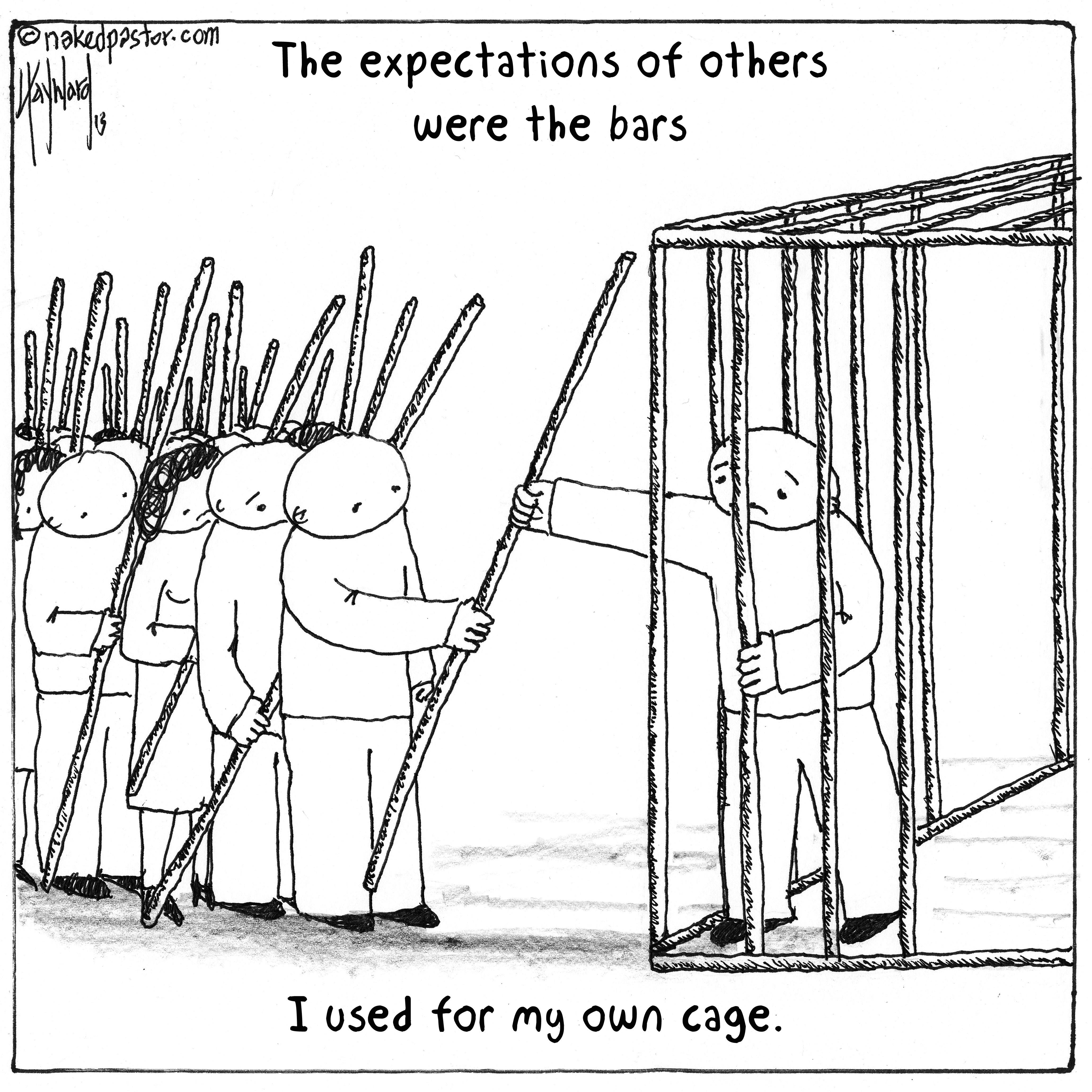
Mindful, meaningful moments need courageous choices, especially when the demands on- and expectations of- our time and energy are increasing.
There is a weirdly powerful zen in walking away from the unfolded towels on the chair, taking the big thermos mug of tea, switching on your go-to playlist, and spending time writing. You may not be able to write or journal for a long period, but it’s the choice, a vote for yourself, that matters. Of course, the towels got folded later…But this way, I reclaimed some time for myself!
Everything you’re doing now, in 2019, is giving me the trust I need to continue now. Our experience, agility, and years of caring help me zero in on what’s most important. Even if no one else gets my choices, you do, and that’s all that matters.
There are no perfect answers. We’ll keep curiously learning and discovering, hon. It’s one way we’ve learnt to move forward with the fear and uncertainty - we don’t judge the emotions, they just are.
You know what matters most, despite the ongoing recalibrations and time warps. Trust yourself. Your caregiving is about making brave choices and love in action. Remember that the choices to dedicate time to yourself and your passion projects are integral to that, too. They’re not an afterthought. Curiosity and empathy need to be directed inwards as well as to others, to meet our version of meaningful caregiving; that’s how we keep evolving and living our truth.
Keep going, hon.
Love you,
2026 Me
Prompt for discussion:
Are you okay with leaving a task incomplete?
Do you catch yourself getting frustrated when you're called away mid-task? Where’s the frustration coming from and why?
Please like ‘❤️’ the article to guide others here.
Thank you for this Victoria. The power of being Zen with incomplete tasks resonated especially.
So many good insights Ty